
Creating a dairy-free product that delivers a rich, satisfying texture can be a significant challenge for formulators. The absence of dairy components leaves a void that, when left unaddressed, results in a thin, icy, or unsatisfying eating experience. Understanding how to use functional ingredients like pectin and locust bean gum is fundamental to building back the body and creaminess consumers expect. This guide explains the science behind these two hydrocolloids and provides a practical framework for using them to achieve a superior dairy-free texture.
Why Dairy-Free Formulations Need Texture Support
In traditional dairy products, a complex system of ingredients works together to create the final texture. Dairy fat, milk proteins like casein and whey, and other milk solids all play a crucial role in providing body, managing water, and stabilizing the structure.
When these components are removed, a formulator must rebuild that texture using alternative ingredients. The primary challenge is not just replacing flavor but re-creating the physical properties that make dairy products so appealing. Hydrocolloids become essential tools in this process, offering a way to control water and build structure in the absence of milk solids.
Dairy-free formulations often struggle with several common textural defects. Products can feel thin or watery, lack creaminess, and develop an icy texture in frozen applications due to uncontrolled water migration and large ice crystal growth. They may also exhibit weak melt resistance, quickly turning into a liquid pool upon warming.
Another frequent issue is syneresis, or water release, where the product separates over time, creating an unappealing appearance and texture. Finally, the eating quality can be compromised, resulting in a short finish that disappears too quickly from the palate or a gummy, sticky residue. These problems highlight the need for a well-designed stabilization system.
Hydrocolloids like pectin, locust bean gum, xanthan gum, and carboxymethyl cellulose function primarily by managing the behavior of water in a food system. They do not directly replace the flavor or nutritional profile of dairy fat and protein. Instead, they thicken, gel, and stabilize the product by forming networks that trap water, control viscosity, and prevent phase separation.
The goal is to use these tools to create a structure that mimics the desired properties of a dairy-based counterpart. Success depends on selecting the right hydrocolloid or blend for the specific application. There is no single solution; the ideal system is determined by the product's format, processing conditions, sweetness level, acidity, and the target eating experience. For example, the requirements for a frozen dessert differ significantly from those for a spoonable plant-based yogurt or a fruit filling, involving different co-solvents and requiring different levels of controlled release for flavor perception.
What Consumers Mean by Creamy, Smooth, and Full-Bodied
Consumers use sensory terms like "creamy," "smooth," and "full-bodied" to describe their ideal texture. For a formulator, translating these subjective terms into measurable physical properties is a critical step in product development. These properties include viscosity, water-holding capacity, gel strength, and melt behavior.
"Creamy" is often associated with a certain level of viscosity and the presence of small, well-dispersed particles that provide lubricity, similar to fat globules in milk. "Smooth" refers to the absence of perceptible particles, such as ice crystals in a frozen dessert or grainy precipitates in a beverage. "Full-bodied" relates to a lasting, rich sensation in the mouth, which is a function of the product's overall structure and its viscoelastic properties.
A rich and satisfying dairy-free texture is the result of a carefully balanced structure, not simply from adding more gum to make the product thicker. Over-thickening can lead to a gummy or pasty mouthfeel and can suppress flavor release, making the product taste bland. The adhesive strength of the product should be managed to avoid an overly sticky character.
The final texture is a complex interplay of all ingredients and processing steps. The hydrocolloid system must work in harmony with fats, proteins, sugars, and acids to create a cohesive and stable product. The right balance results in a clean finish and a texture that feels intentional and indulgent, rather than a compromised alternative. The pseudoplastic (shear-thinning) flow behavior of many hydrocolloid systems is key, providing thickness at rest but thinning out in the mouth for a clean eating experience.
The Role of Hydrocolloids in Water Management
Hydrocolloids are long-chain polymers that interact with water to build viscosity or form gels. When dispersed in water, they undergo a process called hydration, where water molecules associate with the polymer chains, causing them to swell and unfold. This process effectively immobilizes a portion of the water in the system, reducing its mobility and increasing the overall viscosity.
This ability to bind and control water is central to their function as stabilizers. By holding onto water, they prevent it from migrating and forming large ice crystals in frozen products. They also prevent sauces and fillings from weeping or separating, a process known as steric stabilization.
The effectiveness of a hydrocolloid depends on its chemical structure, molecular weight, and its interactions with other components in the formula. Some hydrocolloids, for instance, have excellent cold-water solubility, while others require heat to hydrate fully. The specific mannose-to-galactose (M/G) ratio in galactomannans like locust bean gum influences their properties.
While viscosity is a primary outcome, it is not the only goal. Simply making a product thicker can create an undesirable, heavy texture and can mute flavor perception. The best formulations use hydrocolloids to build a specific type of structure, whether it's a soft gel, a creamy fluid, or a stable foam.
The key is to use the minimum amount of hydrocolloid necessary to achieve the desired effect. Overuse can lead to processing difficulties, such as pumping thick liquids, and can result in a final product that feels gummy, pasty, or unnatural. A thoughtful approach involves sequential hydration steps and careful balancing to achieve a clean texture and bright flavor release.
Understand the Two Ingredients Before Combining Them
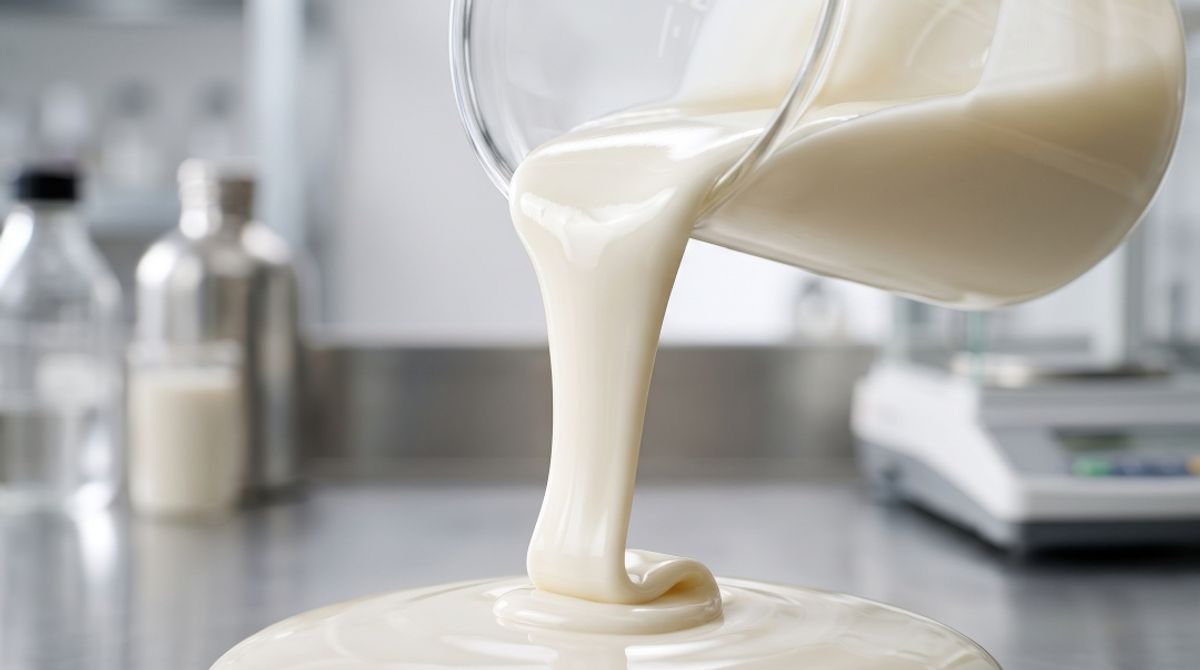
Before creating a blend, it is essential to understand the individual characteristics of pectin and locust bean gum. Both are plant-derived hydrocolloids, but their molecular structures and functional roles are distinct. They are not interchangeable, and their performance is highly dependent on the surrounding food matrix.
Factors such as pH, temperature, sugar level, mineral content, and concentration all influence how these ingredients behave. Processing conditions, including the amount of shear and the rate of cooling, also play a critical part. It is a mistake to treat either ingredient as a one-for-one replacement for dairy components or for other hydrocolloids without thorough testing. Understanding their properties is the first step toward using them effectively together, avoiding issues like molecular disentanglement that can weaken a gel structure. The final concentration ratio between the two is a critical variable.
Pectin: An Acid-Responsive Plant Fiber
Pectin is a complex polysaccharide that is a major structural component of the cell walls of terrestrial plants. Commercially, it is most often extracted from citrus peel and apple pomace. Its backbone is primarily composed of galacturonic acid units.
The functionality of pectin is determined by its degree of esterification (DE), which is the percentage of carboxyl groups that are esterified with methanol. This property dictates how the pectin will form a gel. Pectin's behavior is also influenced by other components like fructooligosaccharides that may be present.
Pectins are broadly classified into two main categories: high-methoxyl (HM) and low-methoxyl (LM) pectin. HM pectins have a DE above 50% and require a low pH (typically below 3.5) and a high concentration of soluble solids (usually over 55%) to form a gel. LM pectins have a DE below 50% and form gels in the presence of divalent cations, most commonly calcium ions, over a broader pH range. A sub-category, amidated LM pectin, has some carboxyl groups converted to acid amides, which can modify its setting properties and reduce its sensitivity to calcium.
Locust Bean Gum: A Galactomannan for Body and Synergy
Locust bean gum (LBG), also known as carob bean gum, is a galactomannan extracted from the seeds of the carob tree. Its molecular structure consists of a linear backbone of mannose units with single galactose side units. The degree and pattern of galactose substitution along the mannose chain influence its solubility and interactions with other hydrocolloids.
LBG does not form a gel on its own. Its primary function is to provide high viscosity, bind water, and contribute a rich, creamy body and a rounded mouthfeel to food products. It is known for its ability to inhibit ice crystal growth in frozen desserts, resulting in a smoother texture.
For LBG to function correctly, it requires careful dispersion and hydration. It disperses in cold or hot water and dissolves at temperatures above 85°C, depending on the medium and process. Uniform dispersion is critical to prevent lumps and ensure consistent texture throughout the product.
How Pectin and Locust Bean Gum Work Together
The synergistic interaction between certain types of pectin and locust bean gum can create unique textures that are difficult to achieve with either ingredient alone. This co-gelation is not a simple additive effect but a result of specific molecular interactions that depend on the right ingredients, processing conditions, and target texture.
When used correctly, the combination can significantly improve body, enhance moisture retention, and build a more continuous and resilient gel structure in certain dairy-free products. This can lead to a creamier mouthfeel in frozen desserts, better stability in fruit preparations, and a unique chew in confectionery. This synergy is particularly useful when compared to using single gums like guar gum.
However, this synergy is not automatic. Using the wrong type of pectin, an incorrect dosage, an inappropriate pH, or a flawed heating and cooling profile can lead to a weak texture, phase separation, or other defects. The work of adhesion between polymer chains is dependent on a favorable environment, which can be modified by components acting as plasticizers. Success requires a deep understanding of how these two polymers interact under specific conditions.
Hydrogen Bonding, Chain Mobility, and Junction Zones
The synergy between LBG and certain other hydrocolloids is thought to arise from interactions between the "smooth" regions of one polymer and the backbone of the other. For LBG, the smooth regions are the mannose backbones that lack galactose side groups. When hydrated, these polymer chains can interact through hydrogen bonding to form localized structural regions known as junction zones.
These junction zones act as cross-links, building a three-dimensional network that traps water and forms a gel or highly viscous solution. The strength and nature of this network depend on the mobility of the polymer chains and their ability to align and interact. Factors like molecular weight distribution and individual solubility profiles play a significant role.
If the chains have too much mobility or if interactions are weak, the product remains a fluid. If the interactions are strong and numerous, the product sets into a firm gel. The combination of pectin and LBG can create a network with properties distinct from what either could form alone, often resulting in a more elastic and cohesive texture. This behavior is highly conditional and depends on the entire formula, including sugars, salts, and acids.
Balancing Viscosity With a Clean Eating Texture
While increased viscosity often correlates with a richer, creamier mouthfeel, there is a fine line between desirable thickness and an undesirable heavy or slimy texture. The goal is to build enough body to mimic the richness of dairy without creating a pasty or cloying sensation that lingers on the palate.
Achieving this balance requires careful control over hydrocolloid concentration and selection. Sometimes, a blend of gums can provide the necessary body and stability at a lower total usage level than a single gum, resulting in a cleaner flavor release and a more pleasant eating experience. A product like a starch jelly has a very different target texture compared to a creamy frozen dessert.
Evaluating texture should always involve both instrumental analysis and sensory evaluation. Instruments can measure properties like viscosity and gel strength, providing objective data for comparison between trials. However, only human tasters can assess complex attributes like creaminess, smoothness, flavor release, and clean finish. A texture that looks good on paper may not deliver the desired eating experience.
Choose the Right Pectin for the Product System
Selecting the correct type of pectin is one of the most critical decisions in the formulation process. The choice depends heavily on the product's acidity, sugar content, calcium sensitivity, required setting temperature, and the final desired texture. There is no universal pectin that works for all applications.
Pectin specifications, such as degree of esterification and setting speed, can vary between suppliers even for products with similar names. Therefore, formulation decisions must be based on the technical data sheet for the specific ingredient being used. Small-scale bench trials are essential to validate performance before scaling up.
It is also crucial to avoid changing pectin types or suppliers mid-production without revalidating the entire process and a final texture. A seemingly minor change in pectin characteristics can have a significant impact on gel strength, setting time, and overall product stability. The presence of other solids like sucrose can also influence pectin behavior.
High-Methoxyl Pectin for Acid and Sugar Systems
High-methoxyl (HM) pectin is the classic choice for traditional jams, jellies, and fruit confections. It works through acid-sugar mechanisms to form a gel. The process relies on creating conditions of thermodynamic favorability for pectin-pectin interactions over pectin-water interactions.
This is achieved in two ways. First, a low pH (typically 2.8–3.5) neutralizes the negative charge on the galacturonic acid units, reducing electrostatic repulsion between the pectin molecules. Second, a high concentration of soluble solids, such as sugar (typically >55% TSS), competes for water, effectively dehydrating the pectin chains. This combination of reduced repulsion and dehydration encourages the pectin chains to associate and form a gel network held together by hydrogen bonds and hydrophobic interactions.
Common applications include fruit preparations for yogurt, bakery fillings, fruit pastilles, and other confectionery. Precise control over pH and solids is essential for consistent results. Issues like a slow or weak set can occur if the pH is too high or the solids are too low. Conversely, adding acid too early or at too high a concentration can cause premature gelation, leading to a grainy or broken gel, especially during confectionery depositing.
Low-Methoxyl and Amidated Pectin for Calcium-Set Systems
Low-methoxyl (LM) and amidated low-methoxyl (LMA) pectins function through a different mechanism. They do not require high sugar levels or low pH to gel. Instead, they form gels by cross-linking with divalent cations, most commonly calcium ions (Ca2+).
The negatively charged carboxyl groups on the pectin chains interact with the positively charged calcium ions, forming junction zones that create a three-dimensional network. This is often referred to as the "egg-box" model, where calcium ions sit between sections of two different pectin chains, binding them together. This mechanism allows for gel formation in a wide range of pH and sugar concentrations, making LM pectins suitable for low-sugar jams, dairy-free yogurts, and various dessert applications where a high water-holding capacity is needed.
Amidated pectins are often more tolerant of variations in calcium concentration and can form softer, more reversible gels. However, controlling calcium reactivity is paramount with any LM pectin. If calcium is added too quickly or is too readily available, it can cause localized over-gelation, resulting in gritty particles or a broken texture. Premature gelation during processing is a significant risk that must be managed by controlling the timing and form of calcium addition.
Formulation Variables That Control Body and Texture
Building the right texture is about managing an entire system, not just choosing a hydrocolloid. Pectin and locust bean gum are just two components in a complex formula that also includes water, sweeteners, acids, minerals, and perhaps fat or protein alternatives. Success depends on understanding how all these ingredients interact.
When developing or troubleshooting a formula, it is best practice to make small, documented changes to a single variable at a time. Adjusting multiple factors simultaneously makes it impossible to determine which change caused the observed effect. The target ranges for pH, solids, and other parameters are not universal; they are specific to the ingredients, equipment, and desired final product.
pH, Acids, and Buffering
The pH of a food system has a profound impact on the behavior of pectin. As discussed, it controls the charge on the pectin molecule, which in turn influences its solubility, viscosity, and ability to gel. Common food acids like citric acid and malic acid are used to lower the pH to the target range for HM pectin gelation. This is achieved through the protonation of carboxyl groups on the pectin backbone.
In LM pectin systems, pH also plays a role by affecting the availability of calcium and the charge density on the pectin. To manage pH stability, formulators often use a buffer. Buffers like sodium citrate or disodium hydrogen phosphate resist changes in pH, which is crucial for consistency, especially in systems where pH can drift during processing or storage. The hydroxyl groups on the pectin also play a role in its overall behavior.
It is important to measure pH at multiple stages of the process. The pH of the initial mix may be different from the pH after all ingredients are fully hydrated and after thermal processing. A final pH check ensures the product is within the specification required for proper gelation and shelf stability, and it can influence properties like initial tack.
Sugar, Polyols, and Total Solids
Sweeteners do more than just provide sweetness; they are functional ingredients that significantly impact texture and stability. Sucrose, glucose syrups, and other sugars contribute to the total soluble solids (TSS) of a system. As mentioned, high solids are essential for HM pectin gelation, as they reduce the amount of available water.
Beyond gelation, sugars and polyols (sugar alcohols) like sorbitol and glycerol affect the freezing point of frozen desserts, contributing to scoopability and a smoother texture. They also influence mouthfeel and the overall perceived body of the product. The kinetic accessibility of water is altered by these co-solutes.
Replacing sugar with high-intensity sweeteners or polyols can dramatically alter the texture, even if the sweetness level is matched. The gelation kinetics of pectin can change, and the final gel may be more brittle or less elastic. In frozen and confectionery products, these ingredients also influence the glass transition temperature, which is critical for preventing crystallization and maintaining stability during storage.
Minerals and Ionic Strength
For LM pectin systems, the concentration and type of minerals are paramount. Calcium is the most common gelling agent, but other divalent cations like magnesium can also participate, though they are generally less effective. The total mineral content from all sources, including the water, fruit purees, and other ingredients, must be accounted for.
Even in HM pectin systems, which do not rely on calcium for gelling, the overall ionic strength of the solution can affect texture. Ionic strength is a measure of the total concentration of ions in a solution. Ions in the system can shield the electrostatic charges on the polymer chains, influencing electrostatic repulsion and attraction. This can alter the viscosity and stability of the hydrocolloid solution.
Therefore, a comprehensive review of the entire formula is necessary. Water quality can vary significantly by location, potentially introducing unexpected levels of calcium or other minerals. A change in an ingredient supplier could also introduce a different mineral profile, leading to batch-to-batch inconsistency if not properly managed. The charge density of the polymers is a key factor influenced by this environment.
A Practical Process for Hydration and Dispersion
Achieving a smooth, consistent texture free of defects begins with a robust and repeatable process for dispersing and hydrating the hydrocolloids. Lumps, uneven viscosity, and an unreliable set are often traced back to improper handling at the mixing stage. The order of ingredient addition is not arbitrary and should be validated for the specific equipment and batch size being used.
Simply having the right percentages of ingredients is not enough. The hydration time, temperature profile, and shear history applied to the mix are just as important as the formula itself. Documenting these process parameters is crucial for ensuring consistency and for effective troubleshooting. The overall thermal stability of the system depends on this initial step being performed correctly.
Preblend Powders Before Adding Water
One of the most common causes of lumps is poor dispersion of the hydrocolloid powders. When added directly to water, the outer surface of a powder particle hydrates instantly, forming a gel-like barrier that prevents water from reaching the powder inside. This results in the formation of stubborn lumps, sometimes called "fish eyes."
To prevent this, always dry blend the pectin and locust bean gum with a portion of the sugar or another granular dry ingredient from the formula. A good rule of thumb is to use at least 3 to 5 parts sugar for every 1 part hydrocolloid. This separates the individual gum particles, allowing them to disperse and hydrate evenly when added to the liquid.
The blended powders should then be added to the liquid under sufficient agitation. The addition should be controlled and gradual, rather than dumping the entire amount in at once. Avoid adding the powders to a static or low-shear liquid surface, as this will encourage clumping and lump formation.
Use Heat and Shear Deliberately
Heat and shear are powerful tools for hydration, but they must be used with intention. As noted earlier, locust bean gum dissolves at temperatures above 85°C depending on the medium and process. Insufficient heating will result in a thinner-than-expected texture and suboptimal performance.
High-speed mixing or high-shear equipment can be very effective at breaking up any small agglomerates and ensuring rapid dispersion. However, excessive or prolonged shear can be detrimental to some hydrocolloids. It can mechanically break down the long polymer chains, leading to a permanent loss of viscosity. The right balance depends on the specific gums and equipment being used.
It is essential to document the key processing parameters for each batch. This includes the mixing time, the speed of the agitator, the temperature profile (heating rate, hold time, and cooling rate), and any hold times before further processing. This data is invaluable for ensuring consistency and for diagnosing any issues that may arise.
Add Acid and Calcium at the Right Stage
The timing of acid and calcium addition is critical for pectin-based systems. Adding these reactive ingredients at the wrong stage can trigger premature gelation, ruining the texture of the final product.
For HM pectin systems, the acid should typically be added late in the process, often just before filling. This allows the pectin to hydrate fully in a higher pH environment before the conditions for gelation are introduced. Adding acid too early can interfere with hydration and lead to a weak or grainy gel.
For calcium-set LM pectin systems, the management of calcium is even more critical. To avoid localized gel particles, the calcium is often added as a dilute solution toward the end of the process under good agitation. In some cases, a slow-releasing calcium salt, like calcium citrate, is used to provide more controlled gelation. The cooling profile is also part of the control strategy, as the final texture of many pectin gels develops as the product cools to a specific setting temperature.
Apply the System to Dairy-Free Products
The combination of pectin and locust bean gum is not a one-size-fits-all solution. The way these ingredients are used, their ratio, and the type of pectin chosen must be tailored to the specific application. The desired structure changes dramatically from a scoopable frozen dessert to a spreadable fruit filling or a chewy gummy candy.
The following examples illustrate how to connect the functionality of these hydrocolloids to practical sensory and processing goals. These are educational frameworks, not complete formulas. Every product concept requires its own development cycle and validation through finished-product testing.
Frozen Desserts and Gelato-Style Products
In dairy-free frozen desserts, the primary goals are to build body, reduce the perception of ice crystals, slow down the melt rate, and improve scoopability. Locust bean gum is a workhorse in this category due to its excellent ability to control ice crystal growth and provide a creamy, rich mouthfeel.
Pectin can be used in combination with LBG to further enhance body and contribute to a cleaner finish. An LM pectin might be chosen for its ability to create a very weak, fluid gel network in the mix, which helps to suspend solids and stabilize the unfrozen phase of the product. This combination supports a smooth texture but does not replace the fundamental roles of sugar in depressing the freezing point or fat alternatives in providing lubricity.
The process is also critical. An aging period for the mix allows the hydrocolloids to fully hydrate. Homogenization, if used, can improve the creaminess by creating a stable emulsion. The freezing conditions, including the draw temperature and overrun (air incorporation), have a massive impact on the final texture and storage stability.
Fruit Fillings, Sauces, and Swirls
For fruit-based fillings, sauces, and variegates used in products like dairy-free yogurts or frozen desserts, the textural needs are different. Key objectives include suspending fruit pieces, providing controlled flow, and resisting water migration into the surrounding product. The sauce needs to be thick enough to stay in place but not so thick that it is difficult to pump or spread.
In these fruit-forward systems, pectin selection is paramount due to the inherent acidity and high solids content. An HM pectin is often a good choice, creating a gel structure that holds the fruit in place. The specific type of HM pectin (e.g., rapid-set vs. slow-set) will be chosen based on the processing and filling temperatures.
Locust bean gum can be added to the system to increase viscosity, improve sheen, and provide a more unctuous, jammy texture. It also helps control syneresis, especially after the product undergoes freeze-thaw cycles. The balance between the gelling power of the pectin and the body-building properties of the LBG is key to achieving the desired spreadability and stability.
Gummy Candies and Fruit Pastilles
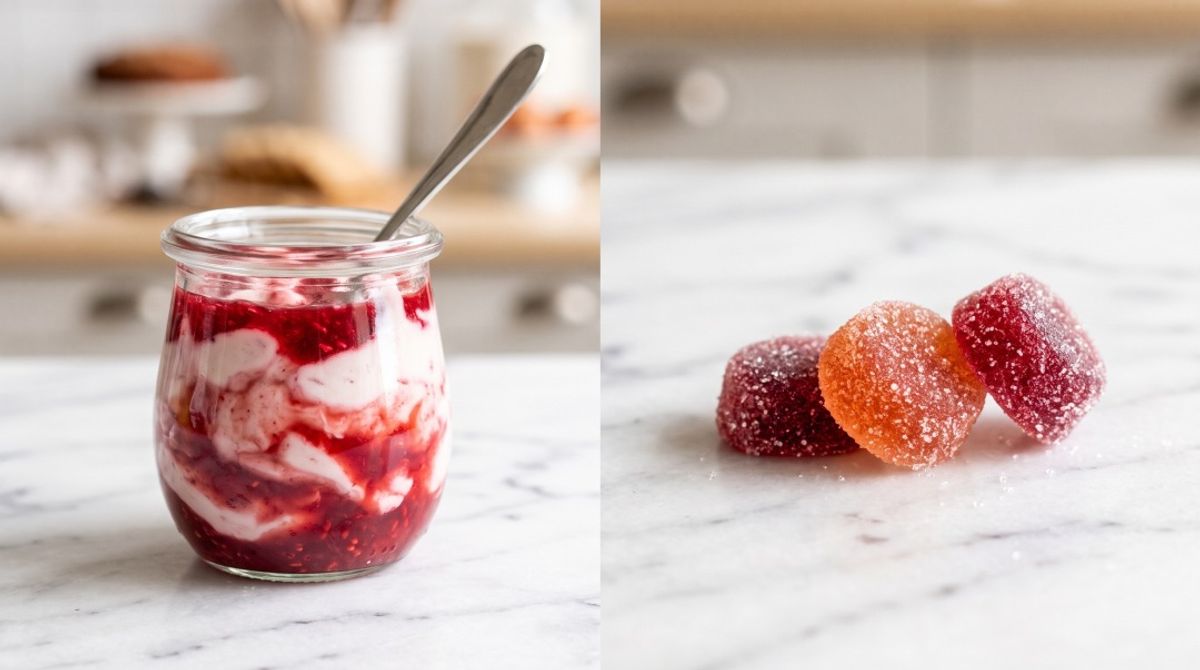
In confectionery applications like gummy candies and fruit pastilles, the goal is to create a firm, chewy, and elastic gel. The texture is defined by the relationship between pectin gelation, total solids, the timing of acid addition, the depositing temperature, and the setting time.
HM pectin is the standard choice for this application. A high solids content (typically 75-85% TSS) and a low pH are required to achieve the characteristic firm, short texture of a fruit pastille. The pectin type must be carefully selected to ensure it sets at the right speed for the depositing process, allowing the product to hold its shape after leaving the nozzle but before it sets completely.
While pectin is the primary gelling agent, locust bean gum can sometimes be used in small amounts to modify the texture. It may contribute additional body or slightly alter the chew, making it less brittle and more cohesive. When formulating, developers must evaluate key textural attributes like hardness, brittleness, and flexibility, as well as the product's long-term moisture stability.
Vegetarian and Halal Confectionery
Pectin-based gelling systems are a valuable alternative to gelatin in confectionery for consumers seeking vegetarian and halal products. Gelatin, derived from animal sources, provides a unique elastic, slow-melting chew that can be challenging to replicate with plant-based ingredients.
Achieving a gelatin-like texture requires a deliberate and often complex approach. It is not as simple as swapping gelatin for pectin. Formulators may use a combination of different pectins, starches, and other hydrocolloids like locust bean gum to build a texture with the desired gel strength, elasticity, and melt profile.
It is important to avoid the assumption that all plant-based gelling systems behave the same. Each has its own unique sensory profile. The goal is not necessarily to create an exact copy of a gelatin-based product but to develop a satisfying and appealing texture that stands on its own merits, while meeting the requirements for vegetarian and halal products.
Measure Whether the Texture Is Actually Better
Improving texture is only meaningful if the changes can be measured and reproduced. Success should be defined by a clear set of criteria that are specific to the product, including sensory attributes, processing performance, and shelf-life stability. It is a best practice to combine instrumental data with feedback from trained tasters, as no single machine can capture the complete human experience of eating.
When comparing different trial formulations, consistency is key. Ensure all samples are prepared, stored, and evaluated under identical conditions, particularly with respect to temperature and age. A frozen dessert tested directly from the freezer will have a very different texture from one that has been tempered for ten minutes.
Useful Texture and Stability Measurements
A variety of instrumental techniques can be used to quantify texture. Viscosity measurements can track the thickness of a mix or finished product. A texture analyzer can perform tests to measure properties like gel strength (the force required to break a gel), penetration force (hardness), and compression modulus (firmness or elasticity).
For stability, tracking changes over time is crucial. This can involve monitoring for syneresis (weeping) in a gel or visible phase separation in a beverage. For frozen products, freeze-thaw stability tests, where the product is cycled through temperature fluctuations, can reveal its robustness to ice crystal growth and structural breakdown. Melt behavior can be quantified by measuring the amount of product that melts over a set period.
In confectionery, processing-related measurements are also important. These can include extrudability, which is relevant for some forming processes, and setting time. Observing defects like tail formation during depositing can provide valuable information about the setting properties of the gel.
Sensory Questions for Product Development
Instrumental data provides the "what," but sensory evaluation provides the "so what." A panel of trained tasters can provide detailed feedback on the attributes that matter most to consumers. The questions asked should be specific and targeted.
Assess attributes throughout the eating experience. This includes the first-bite firmness or hardness, the nature of the chew (is it short, long, elastic?), the perception of creaminess and smoothness, and the speed and quality of flavor release. Finally, evaluate the aftertaste or finish: does it clear away cleanly, or does it leave a residual gummy or fatty coating?
Samples should always be evaluated in comparison to a defined target or a control sample. Evaluating a single product in isolation can be misleading. By recording detailed sensory feedback alongside the batch formula and processing conditions, you can begin to identify the repeatable patterns that connect specific formulation choices to desired sensory outcomes.
Common Formulation Mistakes and How to Correct Them
Even with careful planning, formulation challenges are common. Troubleshooting is a systematic process of linking a specific defect to its most likely causes in the formula or process. The key is to change only one variable at a time during corrective trials; otherwise, the results become difficult to interpret.
When faced with a persistent issue, do not hesitate to consult the technical support team from your ingredient suppliers. They have deep expertise in their products and can often provide valuable insights. Always validate any proposed changes with pilot-scale testing before implementing them in full production.
Lumps, Graininess, or Uneven Thickness
This is one of the most frequent problems and is almost always related to improper hydrocolloid dispersion or hydration. The likely culprits include insufficient dry blending of powders, inadequate agitation during addition, adding the powders to the liquid too quickly, or failing to apply the necessary heat for full hydration.
The correction involves revisiting the mixing procedure. Ensure a thorough preblend of hydrocolloids with at least 3-5 parts sugar. Increase the agitation in the mixing tank and add the powder blend at a controlled rate. Finally, verify that the heating process reaches the target temperature, such as the temperature required for LBG dissolution, and is held for the required time to ensure complete hydration.
Weak Set, Weeping, or Phase Separation
When a product fails to set properly, weeps water (syneresis), or separates into layers, the problem lies in the stability of the hydrocolloid network. The first step is to investigate the critical parameters for your gelling system. For an HM pectin gel, re-check the final pH and total soluble solids to ensure they are within the target range.
For an LM pectin system, review the calcium balance. There may be too little available calcium to form a proper gel, or perhaps too much, leading to a brittle, broken structure that easily weeps. Also consider formula changes that may have inadvertently altered the ionic strength or water availability, such as switching a fruit supplier or changing the type of sugar. Finally, confirm that the hydration and cooling profiles are being executed correctly.
Overly Gummy, Rubbery, or Heavy Mouthfeel
A heavy, gummy, or rubbery texture is a clear sign of an imbalanced hydrocolloid system. The most common cause is simply using too high a polymer concentration. The first step is to systematically reduce the dosage of the pectin, locust bean gum, or both in small increments until the desired texture is achieved.
Another possibility is over-gelation, particularly in calcium-set systems where excess calcium can create an overly rigid and rubbery texture. It could also indicate that the ratio of gums is incorrect for the application, or that the system is too simple. Sometimes, reducing the overall complexity by rebalancing solids, sweeteners, and fat alternatives can lead to a cleaner mouthfeel.
Premature Gelation During Production
Premature gelation, where the product starts to set in the processing tank or transfer lines, is a serious operational problem. It almost always points to an issue with the timing of acid or calcium addition. The reactive ingredient is being introduced too early, at too high a concentration, or without sufficient mixing to disperse it quickly.
Review the process order carefully. Ensure that acid or calcium solutions are added at the very end of the process, under good agitation, and as close to the filler as practically possible. Consider using a more dilute solution to slow the reaction or a buffered system to control pH. Confirm that hold times and temperatures are not allowing the product to sit in a reactive state for too long before filling and cooling.
Safety, Labeling, and Dietary Considerations
Pectin and locust bean gum are widely used and recognized as safe food ingredients by regulatory bodies like the U.S. Food and Drug Administration (FDA) and the European Food Safety Authority (EFSA). However, their suitability for a given individual or product depends on several factors, including local regulations, allergen controls, and consumer expectations.
It is important to avoid making medical or health claims about these ingredients. While they are sources of fiber, their role in a finished food product should be presented from a functional, textural standpoint, not as a health supplement. Formulators must always review the applicable food standards and labeling laws for the markets where the product will be sold.
Digestive Tolerance and Individual Sensitivity
Pectin and locust bean gum are types of soluble and fermentable fibers. For most people, they are well-tolerated in the amounts typically used in food products. However, like other fibers, they may cause digestive discomfort such as gas or bloating in some sensitive individuals, particularly if consumed in large quantities or if their dietary fiber intake is increased abruptly.
People with specific medical conditions, digestive disorders, or concerns about swallowing (dysphagia) should always seek advice from a qualified healthcare professional regarding their diet. Food formulators should be mindful of usage levels to ensure products are enjoyable and well-tolerated by the general population.
Ingredient Declarations and Consumer Expectations
Accurate and transparent ingredient labeling is essential. Pectin and locust bean gum should be declared on the ingredient list using their common and accepted names as required by local regulations. It is important not to create misleading impressions; for example, "dairy-free" does not automatically mean a product is lower in sugar, calories, or free from other allergens like soy or nuts.
Any claims made about the product, such as vegan, vegetarian, or halal suitability, must be substantiated by a thorough review of the entire ingredient system and the manufacturing processes. This includes verifying the source and processing of every single component to ensure it meets the required standards.
Key Takeaways for Better Dairy-Free Texture
Mastering dairy-free texture is an achievable goal for any formulator who approaches it systematically. It requires moving beyond simple ingredient substitution and embracing a holistic view of the food system.
Pectin and locust bean gum are powerful tools that, when used correctly, can provide essential body, manage moisture, and build structure. Their effectiveness hinges on selecting the right type for the job and controlling the environment in which they work.
Success is determined by a range of factors: the specific pectin type, the product's pH, the level of sugar or total solids, the availability of calcium, and the precise application of heat, shear, and cooling. There are no shortcuts to this process.
The most effective path forward is to begin with a clear and well-defined texture target. Run controlled, methodical trials to understand how each variable impacts the final product. Finally, validate the results through a combination of objective technical testing and subjective sensory evaluation to create a dairy-free product that feels intentional, delicious, and satisfying.
FAQs
Q: What do pectin and locust bean gum do in dairy-free foods?
A: Pectin helps create structure and a smooth, gel-like or spoonable texture, while locust bean gum thickens and adds body. Used together, they can make dairy-free products feel creamier and more cohesive without relying on milk fat or dairy proteins.
Q: How do pectin and locust bean gum work together?
A: Pectin forms a network by interacting with the recipe’s components, while locust bean gum holds water and increases viscosity. Their combination can improve thickness, stability, and mouthfeel, though the final result depends heavily on the formula and processing conditions.
Q: Which dairy-free foods can use pectin and locust bean gum for body and texture?
A: They are used in plant-based yogurt, dairy-free desserts, fruit preparations, sauces, and beverages that need more thickness or stability. The best balance depends on whether the product needs a spoonable gel, creamy body, or resistance to separation.