
Quick Answer
Eight suppliers can put gelato in your Connecticut walk-in. Fewer can do it weekly, in about a day, on their own truck. Here is the list, plus the route and cold-chain details nobody puts in the brochure.
Short version: if you run a restaurant, café, pizzeria, bakery or catering company in Connecticut and you want real Italian gelato on the menu, the question is not who makes the best product. Plenty of people make good product. The question is whose truck actually stops at your door, how often, and what happens when you run out on a Friday in July.
Key takeaways
- Regional producers beat national brands on reorder speed. A supplier running its own refrigerated route into Connecticut can turn most orders in about a day. Freight from Arizona or Florida cannot.
- Baci Gelato tops this list because it makes the product, owns the trucks, and Connecticut sits on its existing route from Norwood, New Jersey.
- Gelato is not ice cream, legally or texturally, and the difference shows up on your dessert menu and your food cost.
- Commercial vehicles are banned on the Merritt and Wilbur Cross parkways, which quietly shapes every delivery window in Fairfield and New Haven counties.
- Expect a minimum order. Anyone promising you unlimited free delivery on two pans is either subsidizing it somewhere or about to disappoint you.
The list: 8 wholesale gelato and frozen dessert suppliers serving Connecticut
I ranked these by how they get product into Connecticut, not by how big they are. Own-fleet producers first, then producers who ship, then the broadline distributors carrying frozen desserts of every kind.
1. Baci Gelato (Norwood, New Jersey)
The one I would call first if I ran a Connecticut kitchen.
Baci has been making gelato in Norwood since 2005, which is over 20 years of the same family doing the same thing. They supply 400 plus wholesale accounts across New Jersey, New York, Connecticut and eastern Pennsylvania, and the product list is deliberately narrow: gelato, sorbet, vegan, and gelato accessories like cones, cups and spoons. That is it. No ice cream, no soft serve, no dry goods.
What matters for Connecticut buyers:
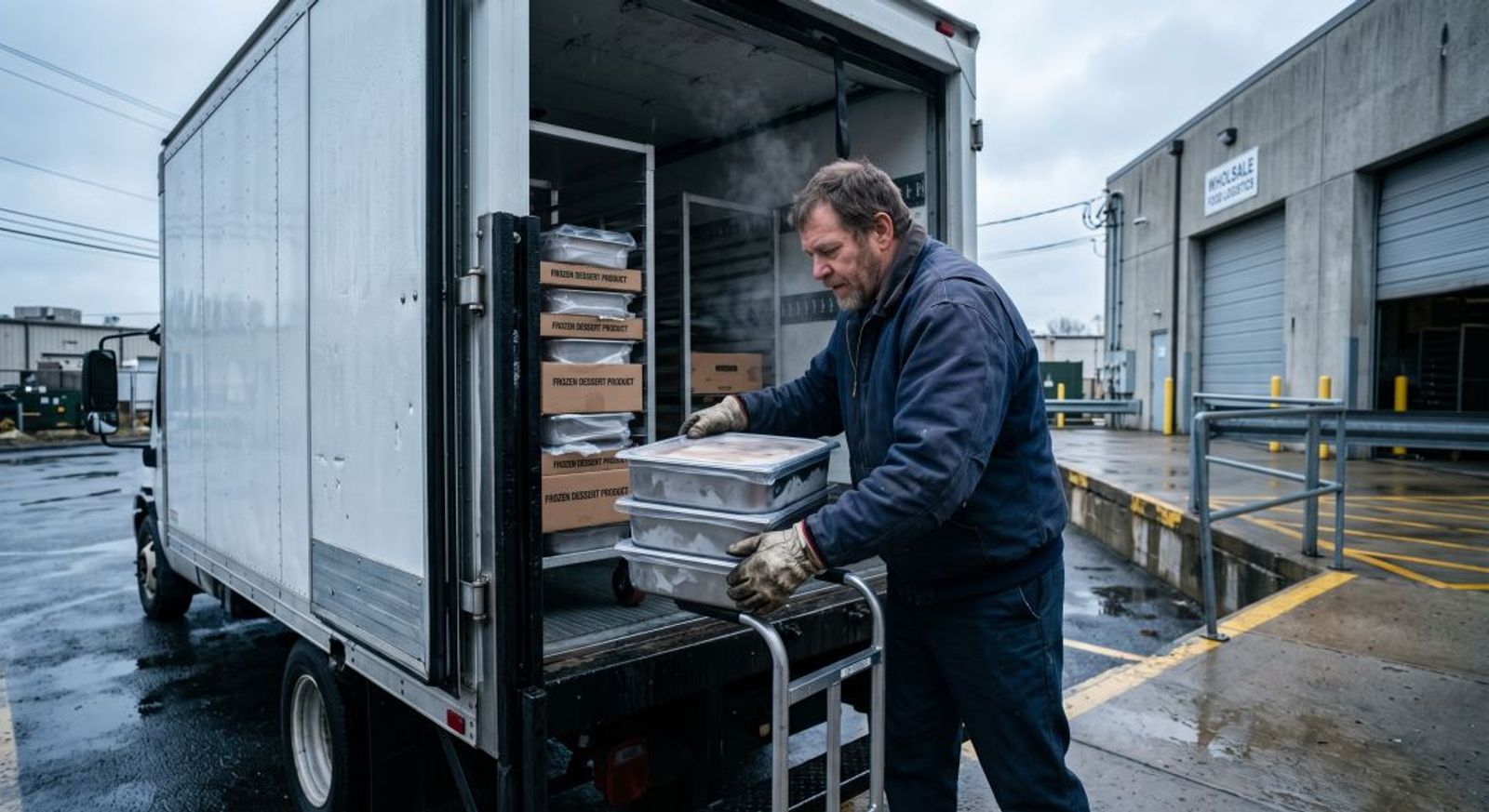
- They own the trucks and employ the drivers. No third-party courier, no handoff to a freight line. Your gelato arrives on a Baci truck with a Baci driver who knows your dock.
- Reorder in about a day. Most products are ready in 1 day once the account is open. If a chef wants a signature flavor built from scratch, that is 2 to 4 days.
- Over 100 flavors, with 168 currently listed across chocolate, coffee, nuts, Mediterranean, Asian, cheese, sorbet and vegan categories. Sorbet alone runs to nearly 40 options, all non-dairy.
- Formats that fit real service: 2.5 quart pans for plated dessert, 5 liter for banquets and volume, 6 liter decorated for gelateria counters, and 2.5 gallon bulk.
- Minimum order is $150 to $300 depending on your location. Straight answer, no games.
Best fit: full-service restaurants, hotels, cafés, caterers and gelaterias from Greenwich through Greater New Haven and up the Hartford corridor.
The honest catch: Baci is a specialist. If you want one invoice covering gelato, novelties, beverages and paper goods, you still need your broadline distributor. Baci replaces the dessert line, not the whole truck.
[Image placeholder 1: refrigerated fleet at loading dock]
2. Gelato Giuliana (New Haven, Connecticut)
The in-state option. Gelato Giuliana hand-crafts and hand-packs artisan gelato and sorbet daily in New Haven and distributes to food service businesses and gelaterias around New England and the tri-state area, in 5 liter containers among other formats. Their sorbet is dairy-free and fruit-forward.
Best fit: New Haven and shoreline operators who want a local story on the menu and a short physical distance between production and plate.
The honest catch: it is a small producer. If you are a multi-unit group needing standing orders across eight locations, ask hard questions about weekly capacity before you commit.
3. Gelotti (Paterson, New Jersey)
Gelotti started as a scoop shop on Union Avenue in Paterson and grew into a wholesale operation with more than 40 years of ice cream and gelato craftsmanship behind it. Founded by Salvatore Sigona, now run by his sons. Their wholesale division serves restaurants, cafés, pizzerias, bakeries, catering companies and specialty retailers across New Jersey, New York, Connecticut and Pennsylvania, with products in businesses through North Jersey, New York City, Long Island and Connecticut.
Best fit: operators who want a recognized regional brand name that customers in the New York metro area already know.
The honest catch: the portfolio leans ice cream. If you specifically want gelato as the centerpiece, you are buying one line inside a broader frozen dessert catalog.
4. Villa Dolce Gelato (Glendale, Arizona)
Founded in 2001 in Los Angeles, now producing out of a 76,000 square foot plant in Glendale, Arizona. Villa Dolce is the largest national wholesale gelato brand, moving product through more than 200 distributors nationwide, with over 30 flavors of gelato and sorbetto built on Roman recipes. They also sell display cases and start-up packages, and they co-pack.
Best fit: multi-state chains and supermarkets that need one gelato spec replicated in ten states.
The honest catch: you are almost always buying through a distributor, which means your lead time, your fill rate and your fix-it call all run through a middle layer. Product comes across the country to get here.
5. Gelato-Go (Miami and Los Angeles)
Started in South Beach in 2013, with a second production lab in Los Angeles. Over 60 gelato and sorbet flavors made fresh daily, supplied to more than 200 hospitality partners. Their client list includes The Ritz-Carlton, St. Regis, Four Seasons and Soho House, and their wholesale division offers private label and co-pack solutions in 5 liter tubs and single-serve cups.
Best fit: luxury hotel groups that already run a Gelato-Go program in Florida or California and want consistency across properties.
The honest catch: production is in Miami and Los Angeles. Connecticut is a shipping problem for them, not a route.
6. GlacierPoint Enterprises (The Bronx, New York)
Not a gelato maker. A direct store delivery operation, and a big one. GlacierPoint is the exclusive DSD distributor for Nestlé and Unilever ice cream, moving frozen products, beverages and dry goods from the New York metro area through the Mid-Atlantic, into supermarkets, delis, drugstores, convenience stores and independent retailers.
Best fit: retail stores, convenience stores and drug store chains that need volume ice cream and novelties on a DSD schedule.
The honest catch: this is a retail-first frozen distribution model. Artisan gelato for a 60-cover dining room is not what the trucks are built around.
7. Wards Ice Cream Company (Paterson, New Jersey)
In business since 1979 as a tri-state distribution company. Wards carries what it calls the largest frozen dessert inventory in the region: bulk ice cream, novelties, cakes, soft serve mixes and frozen yogurt, including national brands like Ben & Jerry's, Häagen-Dazs and Good Humor. Their delivery area covers New Jersey, Lower Connecticut, Westchester, Long Island and the five boroughs, so Brooklyn, Queens and Manhattan accounts sit on the same network as Fairfield County.
Best fit: ice cream shops, mobile vendors, K-12 and higher education facilities, and any operation that needs breadth over specificity.
The honest catch: gelato is a line item, not the mission.
8. Joe's Ice Cream (North Haven, Connecticut)
A Connecticut wholesale ice cream distributor founded in 1984, serving vendors and vending across Greater New Haven with everything from single ice creams to three gallon tubs, plus soft serve supplies, candy, soda and juices.
Best fit: mobile vendors, concessions and independent retailers around New Haven who want one local stop for frozen and dry.
The honest catch: distributor, not producer. Nobody there is developing a custom flavor with your chef.
Also worth knowing: Stefano's Gourmet Desserts in Lake Mary, Florida has been shipping gelato and sorbetto to wholesale buyers since 2008 if direct-ship is your only option. National ice cream brands like Blue Bunny and Mars Ice Cream reach Connecticut the same way, through distributors and wholesalers rather than a producer's own truck.
Quick comparison
| Supplier | Base | What they move | How it reaches CT | Best fit |
|---|---|---|---|---|
| Baci Gelato | Norwood, NJ | Gelato, sorbet, vegan, accessories | Own refrigerated fleet, existing CT route | Restaurants, hotels, cafés, caterers |
| Gelato Giuliana | New Haven, CT | Gelato, sorbet | In-state distribution | New Haven and shoreline independents |
| Gelotti | Paterson, NJ | Ice cream and gelato | Regional wholesale delivery | Pizzerias, bakeries, specialty retailers |
| Villa Dolce | Glendale, AZ | Gelato, sorbetto, cases | 200+ distributors nationwide | Chains, supermarkets |
| Gelato-Go | Miami and LA | Gelato, sorbet, private label | Shipped from FL or CA | Luxury hotel groups |
| GlacierPoint | Bronx, NY | Ice cream, frozen, beverages, dry goods | DSD network | Retail, convenience, drug stores |
| Wards Ice Cream | Paterson, NJ | Ice cream, novelties, soft serve | Tri-state delivery incl. Lower CT | Ice cream shops, mobile vendors |
| Joe's Ice Cream | North Haven, CT | Ice cream, vending supplies | Local CT delivery | Concessions, independent retailers |
Now the part nobody puts in the brochure: getting frozen product into Connecticut
The Merritt problem
Here is a thing out-of-state suppliers learn the hard way. Commercial vehicles are prohibited on the Merritt Parkway, the Wilbur Cross Parkway and the Milford Parkway, and that is not a soft rule. Connecticut DOT spells out the restrictions, and the low stone overpasses have been eating box truck roofs for decades.
So every refrigerated delivery from the west runs I-95 through Greenwich, Stamford, Norwalk and Bridgeport, or swings north on I-84. Which means your 11am delivery window is tied to the single most congested stretch of highway in New England.
Ask your supplier what time their Connecticut route actually runs and which day. If they cannot answer that in one sentence, they do not run a route. They run a shipping label.
Distance is not the same as reliability
Norwood, New Jersey sits roughly an hour from lower Fairfield County in normal traffic, a bit under two hours from New Haven, and about two hours to Hartford. That is a same-day round trip for a truck that leaves the plant cold.
Compare that to gelato coming from Arizona or Florida on freight. It might arrive in perfect condition. It also might sit on a dock in 90 degree heat while somebody finds the receiving manager.
Cold-chain delivery is a chain. Every extra handoff is a link that can fail.
What a thaw and refreeze actually costs you
Gelato that warms in transit and refreezes does not look ruined. That is the trap. It looks fine until you scoop it.
What you get instead is ice crystals through the pan, a grainy pull on the spatula, and a surface that has lost the easy-scoop texture the whole product is built around. You will serve it anyway, because service starts in twenty minutes, and your guest will decide your dessert menu is mediocre.
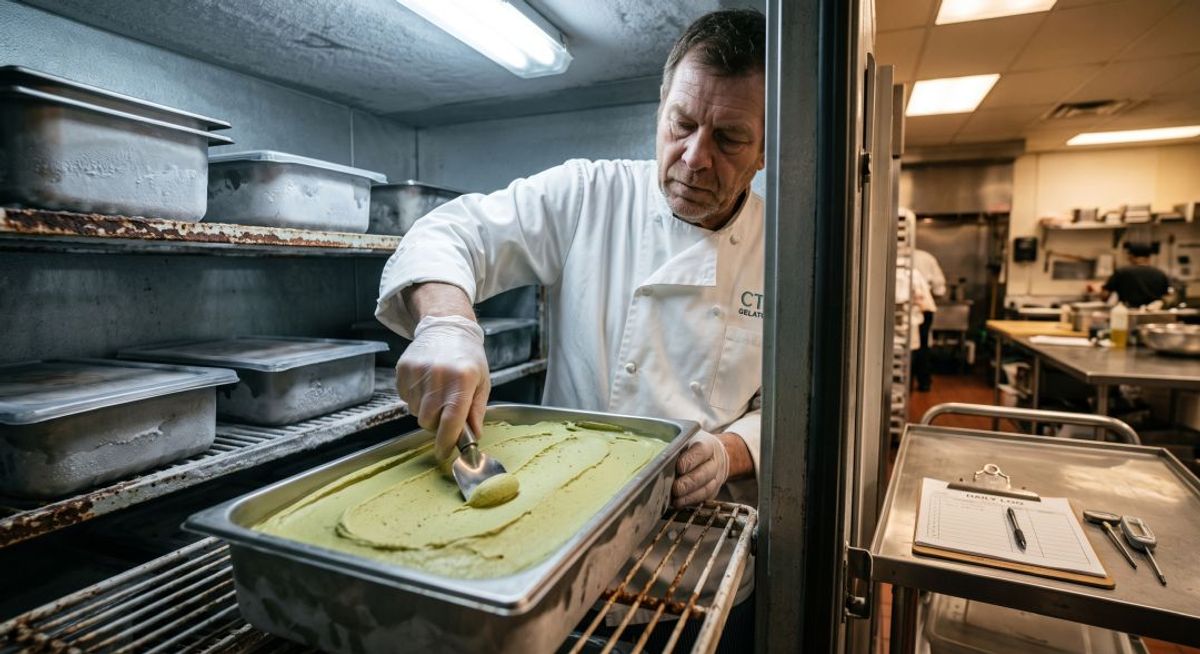
Check the pan at receiving. Heavy frost on the lid, a glossy slick on the surface, or gelato pulled away from the pan edge all mean it warmed up somewhere between the plant and your walk-in. Refuse it. A supplier running its own fleet will replace it without an argument, because the driver already knows what happened.
For the food safety rules on holding and handling frozen product in-state, the Connecticut Department of Public Health Food Protection Program is the reference your health inspector is working from.
Standing orders beat panic orders
The operators who do this well set a standing order and adjust it seasonally instead of calling in a scramble every time the weather turns.
A short lead time makes that possible. When most products are ready in about a day, you can carry less inventory in the walk-in, which matters more than it sounds when your freezer space is already fighting with proteins and par-baked bread. Custom flavors take longer, usually 2 to 4 days, so plan those around menu changes rather than weekends.
[Image placeholder 2: chef checking gelato pan at receiving]
Gelato, ice cream, sorbetto: what you are actually buying
Worth getting straight, because it affects your menu language and your price point.
Ice cream has a federal standard of identity. It has to contain at least 10% milkfat. It is churned fast, which whips in air, and the industry term for that air is overrun. The International Dairy Foods Association notes that regular ice cream typically runs 90 to 100% overrun, meaning up to half the volume of an economy tub is air.
Gelato is churned slowly and holds far less air, usually in the 20 to 35% range, with less fat because it uses more milk than cream. Denser body, more concentrated flavor, and it is stored and served slightly warmer than hard ice cream. Same weight of product goes further on the plate because the scoop is doing more work.
Sorbetto and sorbet are the same thing. Italian word, English word. Water-based, non-dairy, fruit-forward. It handles the dairy-free ask on your menu without a separate vegan line, though vegan gelato exists too if you want something creamier.
The practical takeaway: do not write "ice cream" on a menu where you are charging gelato prices. Guests in Connecticut have eaten enough of both to know the difference, and the ones who have been to Italy definitely do.
What to ask a supplier before you sign anything
- Do you own your trucks, or do you ship through a carrier? This single question separates most of the list above.
- What day does your Connecticut route run, and what is the reorder lead time? One day is achievable. If you hear three to seven days, that is a freight schedule.
- What is the minimum order, and does it change by town? For Baci it is $150 to $300 depending on location. Others vary widely.
- What pack sizes do you carry? 2.5 quart works for plated dessert. 5 liter is the workhorse for catering and volume, and some producers pack in 4 liter tubs instead. Match the format to your service, not to the price sheet.
- Can you develop a flavor with my chef, and how long does it take? Limited-edition offerings and seasonal specials are where a dessert menu earns its keep. A producer can do this. A distributor generally cannot.
- What happens when a pan arrives soft? Listen for how fast they answer.
Why this matters in Connecticut specifically
Connecticut has a serious eating-out culture for a small state, and full-service restaurant employment sits around 56,000 people statewide, per federal labor data compiled in the National Restaurant Association's state statistics.
The market is not one market, though. Fairfield County runs on New York expectations and New York price tolerance. Greater New Haven has the Wooster Square Italian-American tradition and a university crowd that fills tables year round. The Hartford corridor, West Hartford, Farmington, New Britain, Glastonbury, East Hartford, Newington, Bloomfield, South Windsor, Avon and Manchester, is where catering companies and hotel banquet programs do real volume. And the shoreline is brutally seasonal, quiet in March, slammed from June through Labor Day.
A gelato program flexes across all four of those in a way a fixed dessert menu cannot. Rotate the sorbetto in summer, pull the pistachio and hazelnut forward in the fall, run a limited flavor for a holiday menu. The Connecticut Restaurant Association has been making the same argument about differentiation for years, and dessert is usually the easiest place to act on it.
FAQ
Can a Connecticut restaurant order wholesale gelato from a New Jersey producer? Yes. Producers like Baci Gelato run refrigerated routes from Norwood, New Jersey into Connecticut, New York and eastern Pennsylvania on their own fleet. You are a route stop, not a shipping destination.
What is a normal lead time for wholesale gelato delivery? With a producer running its own trucks, most products are ready in about 1 day once your account is set up. Custom flavors developed with your chef typically take 2 to 4 days. Anything longer usually means freight is involved.
Is there a minimum order for wholesale gelato in Connecticut? Yes, and it varies by supplier and by how far you are from the plant. Baci's minimum runs $150 to $300 depending on location. Ask for the number in writing before your first order.
What container sizes should a restaurant order? 2.5 quart pans suit plated dessert and single-flavor service in a reach-in. 5 liter is standard for catering, banquets and high volume. 6 liter decorated pans are built for gelateria counters and display, and 2.5 gallon bulk is for the highest-volume food service operations.
Bottom line
Every supplier on this list can put frozen dessert in your walk-in. Fewer of them can put the same gelato in your walk-in every week, in about a day, on their own truck, with the person who made it available to talk to your chef.
If your dessert menu is a line item you tolerate, buy from whoever is cheapest. If it is something you want guests to mention on the way out, buy from someone whose entire business is that one category.
Baci Gelato covers Connecticut as part of its standing tri-state route. You can browse the full flavor range, look at how the wholesale program works for restaurants, or request a free sample pack and taste it before you commit to anything.
Related reading: the wholesale gelato and sorbet guide for the tri-state area and the rundown of wholesale gelato suppliers serving New York and the tri-state. Operators comparing across state lines may also want the New Jersey wholesale gelato overview.
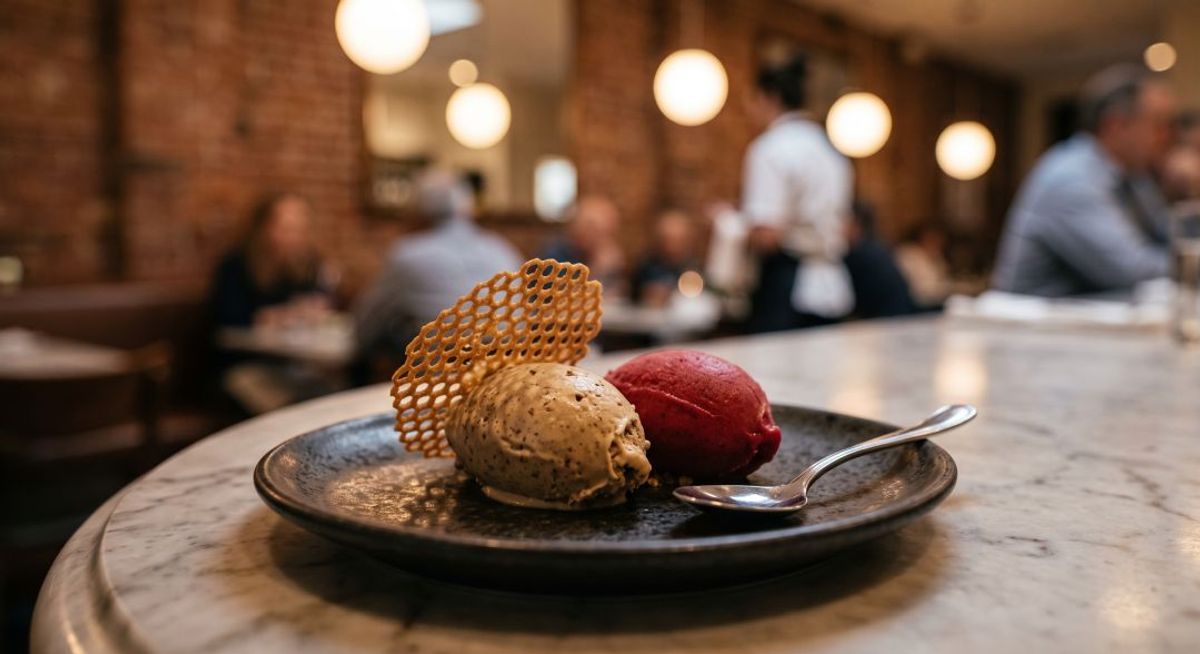
[Image placeholder 3: plated gelato dessert in a Connecticut restaurant dining room]
About the author
Written by the Baci Gelato wholesale team, working out of the Norwood, New Jersey production floor since 2005. The team supplies more than 400 restaurants, hotels, cafés, caterers and gelaterias across New Jersey, New York, Connecticut and eastern Pennsylvania, and spends most of its week talking to chefs about pack sizes, route days and what to do when the walk-in is full. Reviewed for accuracy against current route coverage, pack formats and lead times in August 2026.
